


Fall Is a Good Time to Start Long-Term Radon Testing
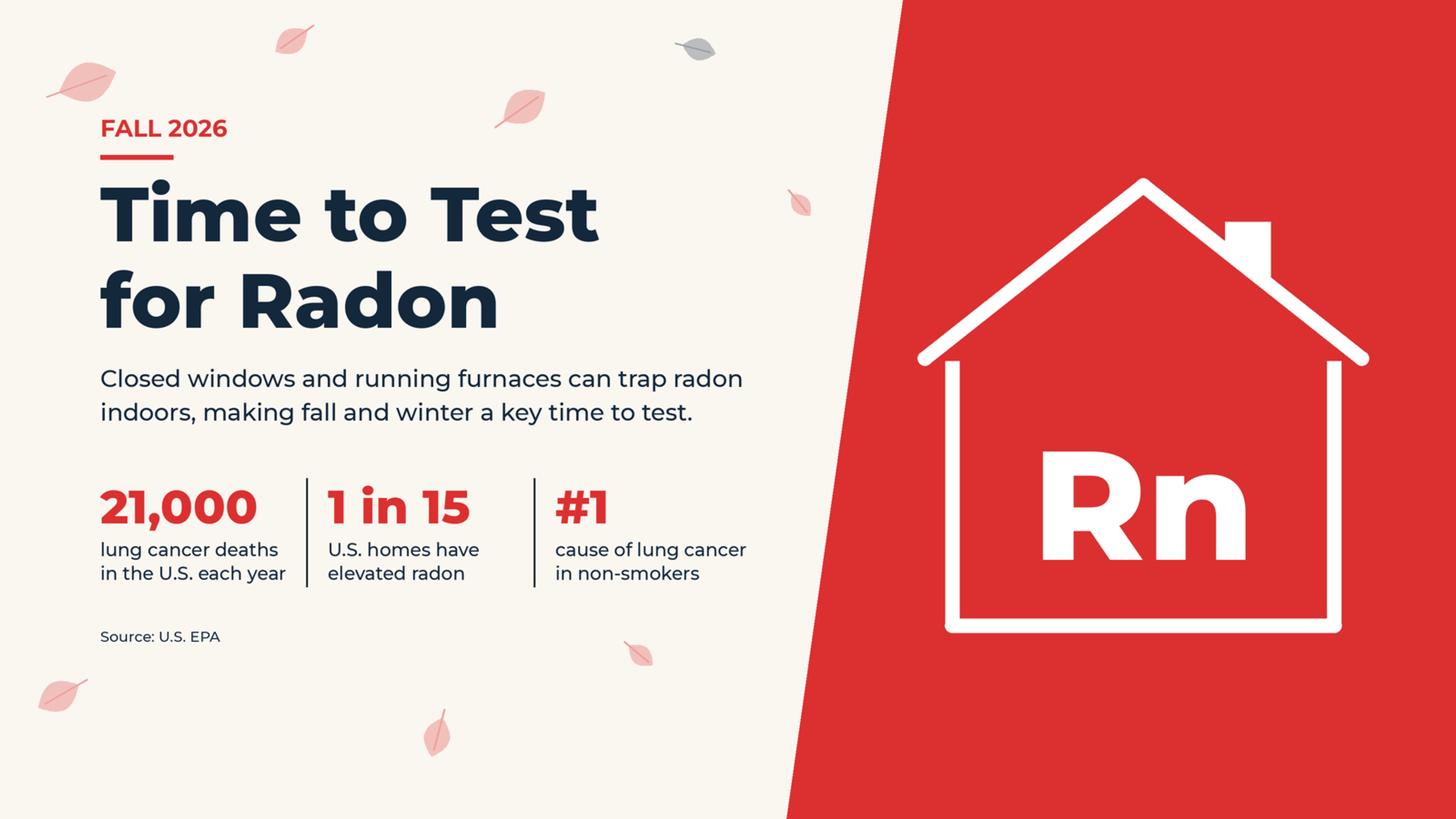
As cooler weather arrives across much of the United States, fall is a good reminder to test your home for radon. Starting a long-term test now means measuring through the colder months, giving you a clearer picture of the radon levels you live with.
Radon is a naturally occurring radioactive gas that seeps into homes from the ground through cracks in foundations and gaps around pipes as well as water supplies. It is invisible and odorless, and long-term exposure increases the risk of lung cancer.
State authorities report elevated levels in a substantial share of tested homes. In Minnesota, the Department of Health reports that two in five homes tested have radon levels that pose a significant health risk. In Pennsylvania, the Department of Environmental Protection reports that about 40% of tested homes exceed the U.S. Environmental Protection Agency’s (EPA) action level of 4 pCi/L. These figures reflect homes that have been tested, not a representative sample of all homes in either state.
Location alone can’t tell you whether your home has elevated radon levels. Levels can vary considerably even between neighboring houses, which is why testing your own home is essential.
Why measure over a longer period?
Radon levels change with the weather, ventilation, and how a home is used as well as over the years. In colder months, closed windows and rising warm air can contribute to higher indoor levels, although seasonal patterns vary from home to home and between climates.
The EPA defines a long-term test as one lasting more than 90 days. Compared with a short-term test, which can last from two days to a few weeks, a long-term test is the reliable measurement to reflect a home’s year-round average radon level. Fall is a practical time to start, but you can test at any time of year.
“A long-term radon test is one of the simplest things you can do for your home’s health. It takes a few minutes to set up, costs around USD 60, and then quietly measures for three months or more while you go about your life. Because radon levels change from day to day, a longer test gives you a far more reliable answer about whether your home needs attention,” says Benjamin Portin, Vice President, North America, at Radonova.
How to get started
With a passive detector such as Radonova’s Radtrak³, place the detector as described in the instructions and register the start date in MyPages, Radonova’s online portal.
Leave the detector undisturbed for the full test period and go about life in your home as usual. When the test is over, register the stop date and promptly return the detector to the laboratory in the prepaid envelope included with your kit. Once the analysis is complete, you’ll receive a PDF report accredited against the ISO standard 17025 by email with your results and guidance on next steps.
Short-term testing is also useful when you need results quickly.
Understanding the result
The EPA recommends fixing homes with long-term results of 4 pCi/L or higher and considering radon reduction for levels between 2 and 4 pCi/L.
If action is needed, a qualified radon mitigation professional can assess your home and recommend a solution. You can search the National Radon Proficiency Program’s professional directory and check whether your state has licensing requirements.
After the work is done, a follow-up test confirms that radon levels have come down. This should also be done with a long-term test for most accurate reading.
Related News
Why Radon Levels Fluctuate in Homes

February 20, 2026